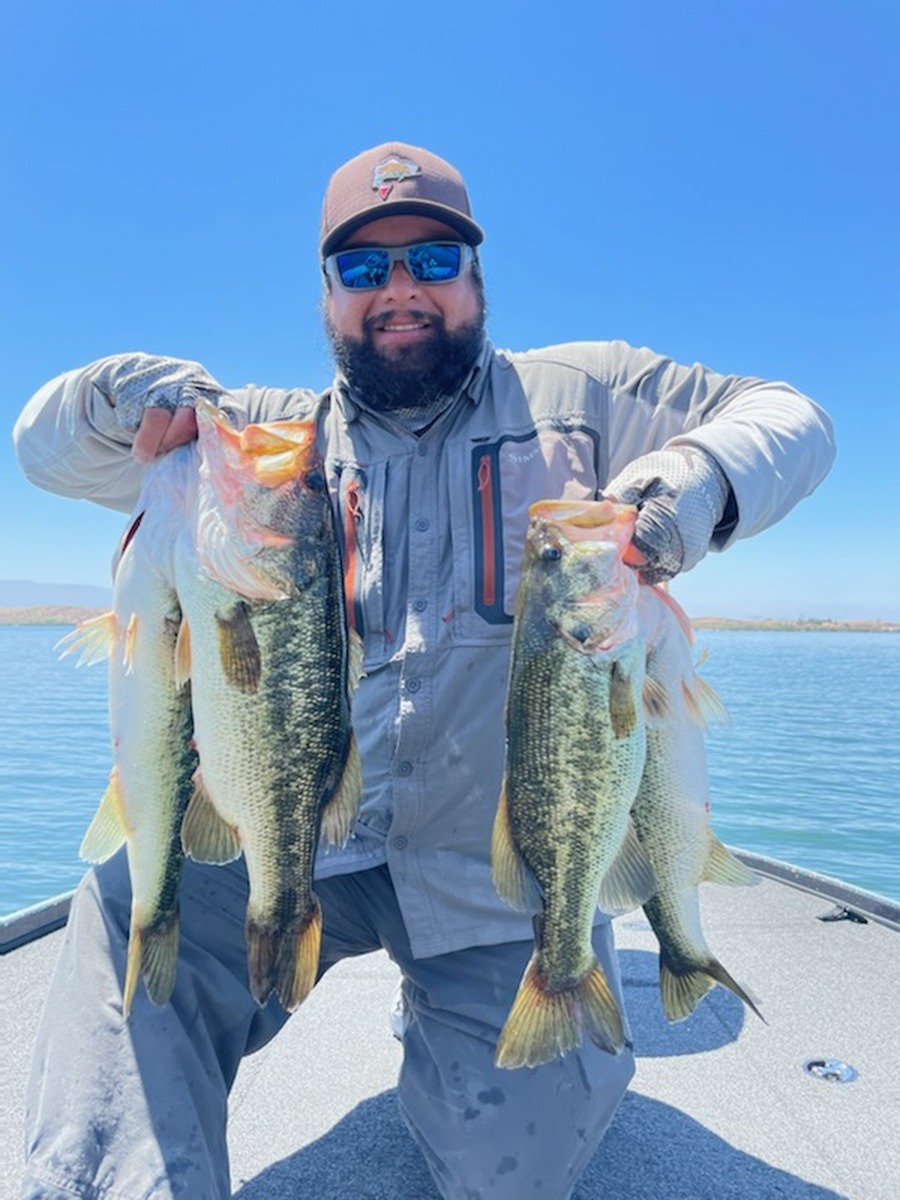
Paid in Full by the Pacific – Forty Bass, One Crispy C-Note, and Zero Days Off
I was somewhere around the launch ramp at six in the morning, half-submerged in an inflatable rubber donut, and the sun hadn’t even risen yet. God bless going back to Standard Time.
Any man who willingly launches himself into the industrial grease of any marina in SoCal before sunrise is either running from the law or deeply in the grip of a degenerate sickness. Fortunately, spotted bass do not give a shit about your circadian rhythm, and the harbor was already twitching with life and with its usual residents, and I don’t mean the seals.
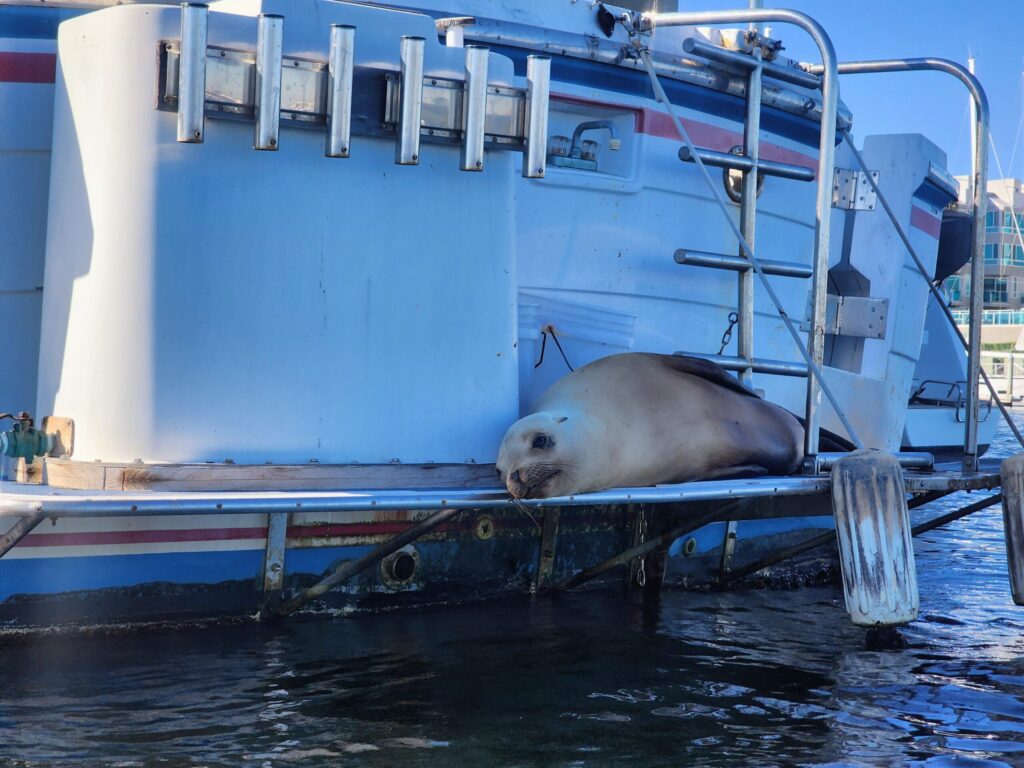
The harbor was choked with the usual parade of weekend warriors, all of whom had apparently been granted a temporary leave of absence from their jobs—as had I—for this glorious Wednesday observance of Veterans Day. SUPers thrashing the surface like panicked seals, boats throwing wakes big enough to swamp a tug, and one brave, ballsy maniac piloting a freshwater 15″ Lowe aluminum tin can straight into the corrosive belly of the Pacific. I winced. Watching salt eat a man’s hull in real time is a grim spectacle, even when it isn’t your money dissolving. Kayakers with their varying degrees of electronics and lithium-powered propellants whizzed back and forth, staring at the screens at their feet
Yet this floating circus proved one vital, degenerate truth: you can buy fifty thousand dollars’ worth of marine electronics and a motor loud enough to wake the dead, and you will still blow right past the money spots. That is the savage beauty of the float tube. You aren’t trying to cover miles; you are a silent, submerged sniper slipping into the dark, claustrophobic alleys where the heavy artillery can’t fit.
The fish weren’t hiding today—they were just sick of the circus.
I have haunted these slips long enough to know where the beasts live. The channel-facing edges are prime real estate, which is precisely the problem—every moron with a rod in Los Angeles, present company included, knows it, too.
There came a point where I drifted up to a stretch that had just been carpet-bombed by that Lowe and a yakker. The water had been worked over, and the fish down there had been subjected to a relentless, terrifying parade of plastic, lead, and every conceivable bait people are pushing on YouTube. Fifteen different lures shoved in their faces before lunch. At a certain point, even a cold-blooded predator starts to suspect something’s up.
The fish were stacked there, sure enough, sulking in the shadows with lockjaw. Going head-on was a sucker’s game. So I ended up slipping around the back side of the docks, wedging my rubber tube into empty, forgotten slips tucked deep against the bulkhead, and attacked the exact same fish from their blind spot.
Chaos. Immediate, violent chaos.
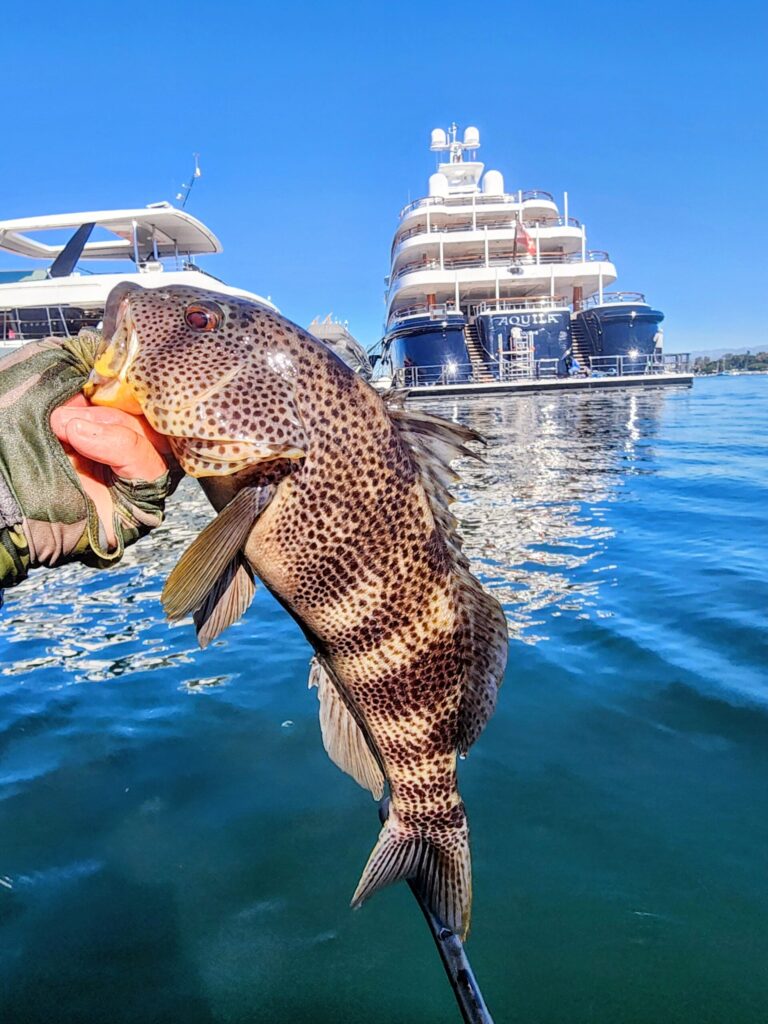
They weren’t hiding in some mythical honey hole; they were sitting right in their living rooms, just waiting for someone with enough sense to come through the back door instead of kicking down the front. All morning long, I played this guerrilla game—flanking the crowds, slipping behind the pilings, ambushing battered fish that hadn’t seen a bait come from that angle all week.
Hardware, heavy artillery, and Japanese wizardry
A campaign like this requires the right ordnance, and this trip served as a live-fire test for some fresh weaponry.
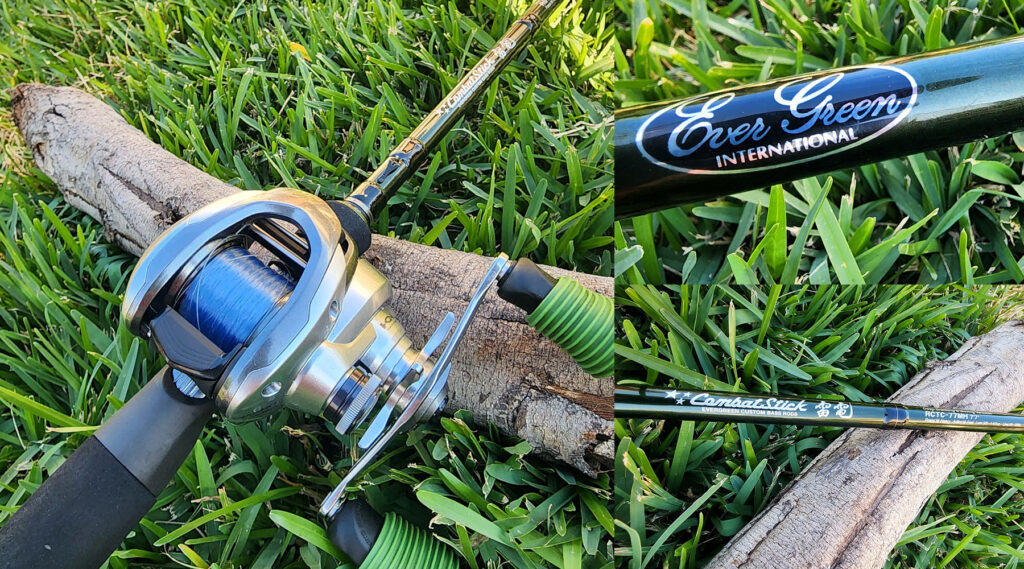
The Evergreen Brett Hite Combat Stick bolted to a slightly slower Tranx 150 is an absolute weapon. It feels like someone took my old Cumara Reaction 7’6″ ML, locked it in a basement with a crate of pure protein, and forced it to lift weights with Fernando Tatis Jr and his steroids. It has the nerve-ending sensitivity to feel a bass breathe on a jig, paired with enough raw, unforgiving backbone to yank a stubborn fish out of a barnacle-encrusted piling before it wraps you around something expensive. The sweet spot is 3/8-ounce, though it slings 1/2-ounce without flinching. Paired with the low-gear torque of the Tranx, chucking and winding feels like second nature.
Varivas SW Nylon: A pleasant shock
I can usually tell if a spool of line is garbage before I finish cinching the first knot. There is a specific, tactile truth in how a line seats and stretches under brutal tension these fish provide. Varivas SW Nylon passed the interrogation immediately. It flies off the spool, holds a knot like a vise, and when two separate bruisers buried me deep in the harbor hardware, the line didn’t even blink.
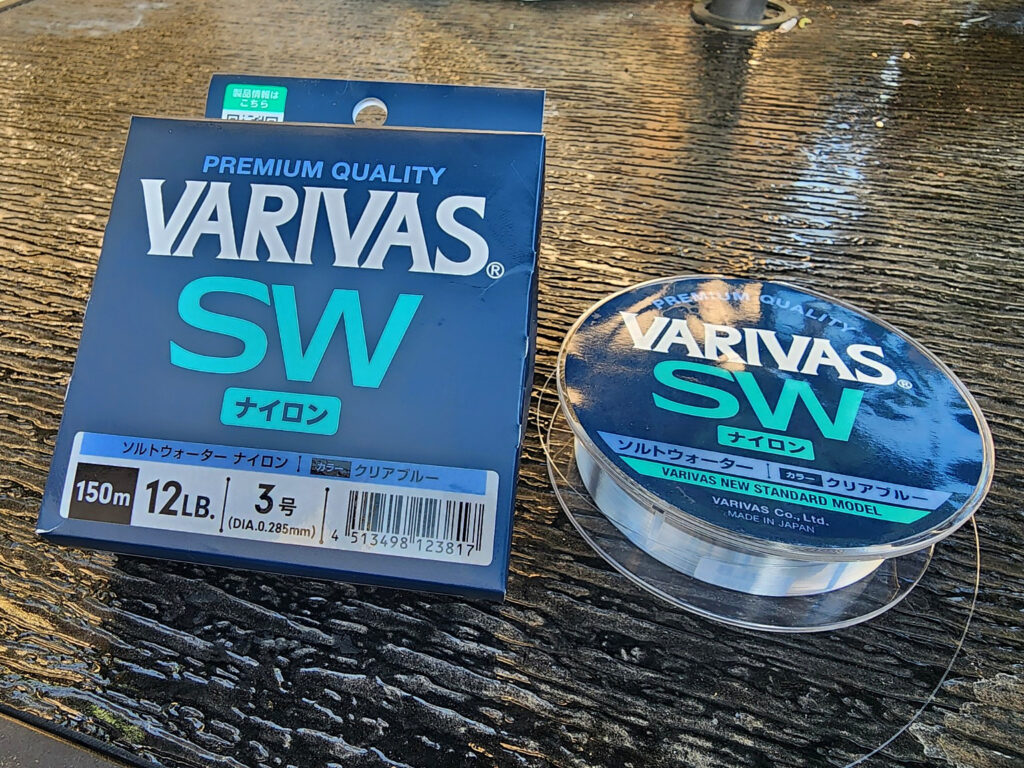
Better yet, it comes in a stealthy sea-blue instead of that radioactive highlighter yellow favored by guys who think they can spot a strike by watching a single fluorescent molecule twitch three feet underwater. And unlike American line companies—who slap wildly optimistic pound-test numbers on the box like used-car salesmen—the Japanese 14-pound rating behaves like an honest, muscular 12-pound nylon. It’s got the soul of Sunline Machinegun Cast, and it earned its keep. I cannot, however, make any definitive assertions about a line until it’s had a good season under its belt. But I think I’ve found my jam.
The Imakatsu Shakey Chatter: Sabotage at the finish line
Not everything survived the battle. The Imakatsu Shakey Chatter has always had all the makings of a masterpiece—killer compact tungsten head, tight profile, thin blade that induces wobbling at the first turn of the handle, and absolutely lethal action. Unfortunately, whoever designed the hook must have been three martinis deep at lunch. That soft bronze wire is a travesty. Time after time, a bass would crush the bait, the rod would load up, and halfway to the tube the hook would simply give up the ghost. If your hook won’t hold, you aren’t fishing—you’re running an expensive charity buffet for spotted bass.
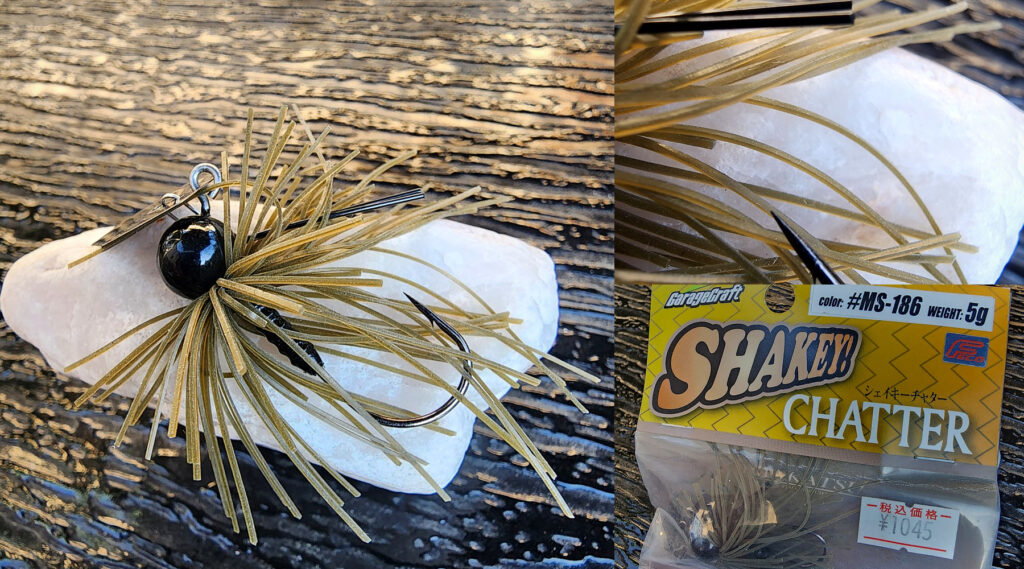
A tungsten jig with a shitty hook is like a Rolls with windows you still have to roll up.
The pink monstrosity and the law of gravity
I also sourced a true unicorn: a pink Jackall TG Spade Jig trailing an OSP DoLive Beaver—a combination so violently pink and absurdly oversized it looked like a cartoon fever dream. The bass had absolutely no objections. I caught fish on it, and they seemed perfectly happy to eat the thing.
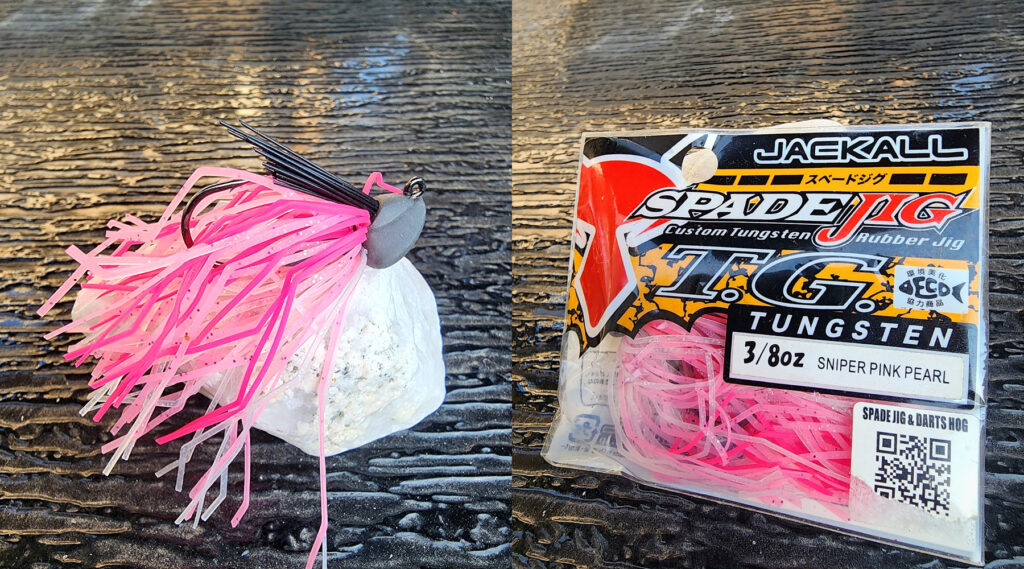
Unfortunately, the laws of hydrodynamics had other ideas. Between the skirt’s long, pubic-hair-like filaments and the Beaver’s oversized appendages, the whole rig had the aerodynamic grace of a deployed patio umbrella. It created so much drag that getting the bait down to the bottom took an eternity. I wasn’t having trouble getting bit; I was having trouble getting the damn thing into the strike zone in a reasonable amount of time.
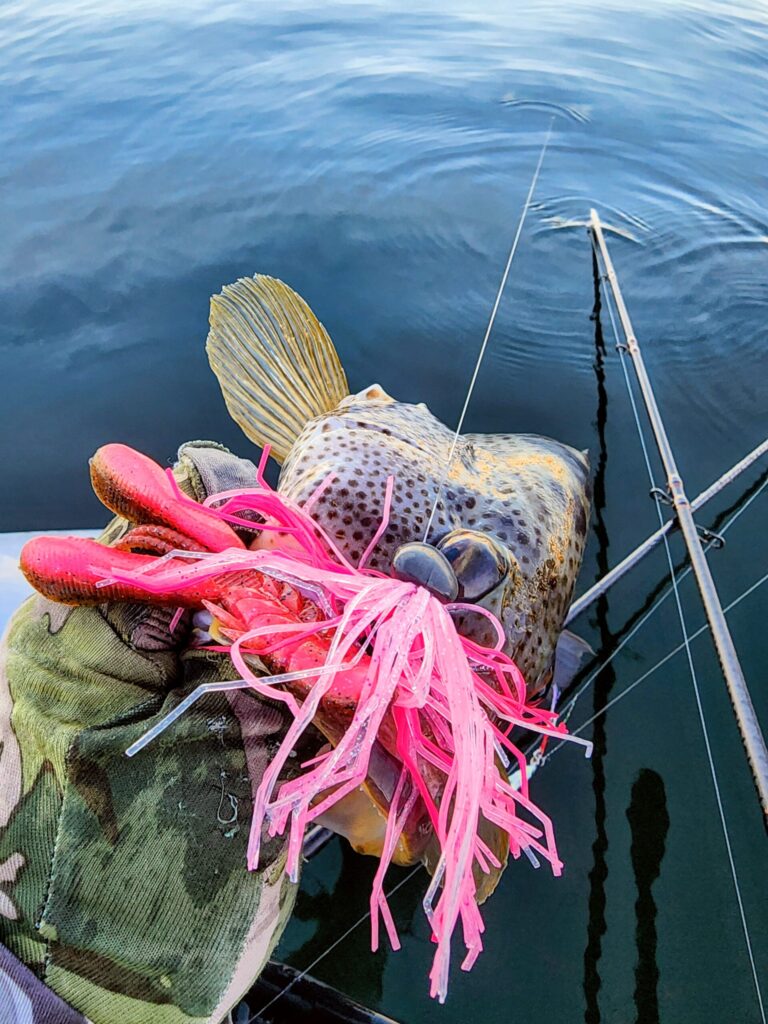
Rather than wasting precious daylight playing mad scientist with trailers, I swallowed my pride, retired the pink parachute, and tied on the old reliable: a 3/8-ounce Keitech Type 2 football jig. The streamlined profile got down much faster, and immediately the slaughter resumed at a quicker pace. The pink rig had proven it could catch fish. It just wasn’t the right tool for working efficiently through the water column that day.
For the trailer? We went back diggin’ in the crates and pulled out an oldie, a goodie, and something no longer made. The Keitech Custom Trailer Double Tail. Another Bargain Bin purchase of yesteryear that is doing some work now. The rubber these are made with is a lot more durable than that of other JDM trailers I’ve been known to use
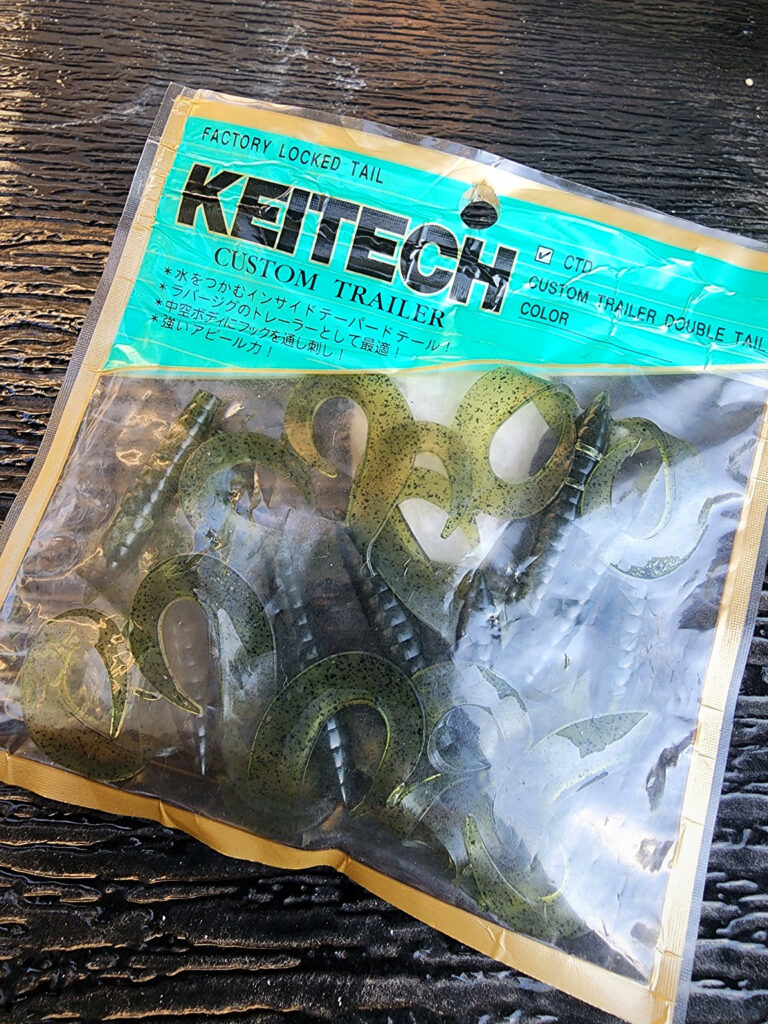
Sometimes wisdom isn’t finding a magic color; it’s admitting your beautiful little science experiment has the sinking characteristics of a patio umbrella. Best of all, I only sacrificed one jig to the harbor gods—which works out nicely, since Tackle Warehouse just dropped 25 fresh Keitechs on my porch to replace the small fortune I’ve donated to this marina and Lake Nacimiento all year.
Two hours of cardio for a whole lot of nothing
Of course, hubris always demands a tax.
Around mid-morning, gripped by a sudden urge to cover open water, I kicked my fins for what seemed like eons out toward the main channel, firing moving baits into the abyss. That was my OCD wanting to continue testing out the new Evergreen rod.
Nothing. Not a tap. Not a swirl. Not even a sympathetic nibble from a starving lizardfish.
The channel has been a dead zone for weeks, offering all the hospitality of a closed DMV. It is a special kind of madness to spend two hours voluntarily propelling yourself across open water like a human outboard motor, burning through your quads for zero return, only to paddle back to the docks you started at and immediately start catching fish again. You don’t do this because it makes sense; you do it because you’re sick.
Enter Benjamin Franklin
Somewhere in the middle of the dock-hopping, a piece of soggy debris came drifting down-current and bumped squarely into my lap.
I barely glanced at it until that unmistakable, eerie modern green caught my eye.
“YES! A STRIPPER DOLLAR!” I barked across the quiet slip, snatching a waterlogged hundred-dollar bill straight out of the Marina del Rey current.
Clearly, someone on one of the mega-yachts had a significantly wilder Tuesday night than I did. And before the cynics ask—no, it wasn’t rolled up tight, though I checked twice out of sheer journalistic habit. Years on the water sharpen your instincts for subtle ticks in your line and hidden shadows under a dock, and apparently, spotting floating federal currency is part of the same survival toolkit. I shoved old Ben into my soaking wet pocket, realizing the harbor had just paid me a C-note to pillage its bass population. I’ve had far worse sponsorship deals.
The 2:00 PM black hole
By early afternoon, the body count sat somewhere between forty and fifty spotted bass, with a solid twenty of them heavy enough to count as legitimate keepers. Then, right around two o’clock, someone threw a master switch and turned off the ocean.
One minute the water was alive; the next, I was casting into a sterile, lifeless swimming pool. Maybe the tide shifted, maybe the barometer dropped, or maybe the fish simply packed their bags and left town. The taxi dock and the LMU stretch were complete ghost towns—two former honey holes that have been steadily dying off as the year bleeds out. Yesterday’s goldmine is tomorrow’s desert.
The final reckoning
When I finally dragged my rubber donut out of the brine, the ledger looked absurdly good: forty-plus fish, twenty solid keepers, a masterclass in back-alley dock angles, a lethal new Evergreen/Tranx setup, a spool of Japanese nylon worth every yen, a fresh supply of Keitechs on the way, and a soggy hundred-dollar bill drying on the dashboard—which will inevitably be laundered straight back into the tackle industry, funding the harbor’s own continued exploitation.
The General Sherman—my beloved, broken-backed Chronarch 100B—remains in honorable retirement with its blown anti-reverse, while the new blood takes the field.
I drove home reeking of spotted bass, saltwater, and water logged currency, grinning like a man who had beaten the system—only to walk through the front door and discover that I did not, in fact, have Veterans Day off from work.
Apparently, the marina isn’t the only place where I completely misread the conditions.